
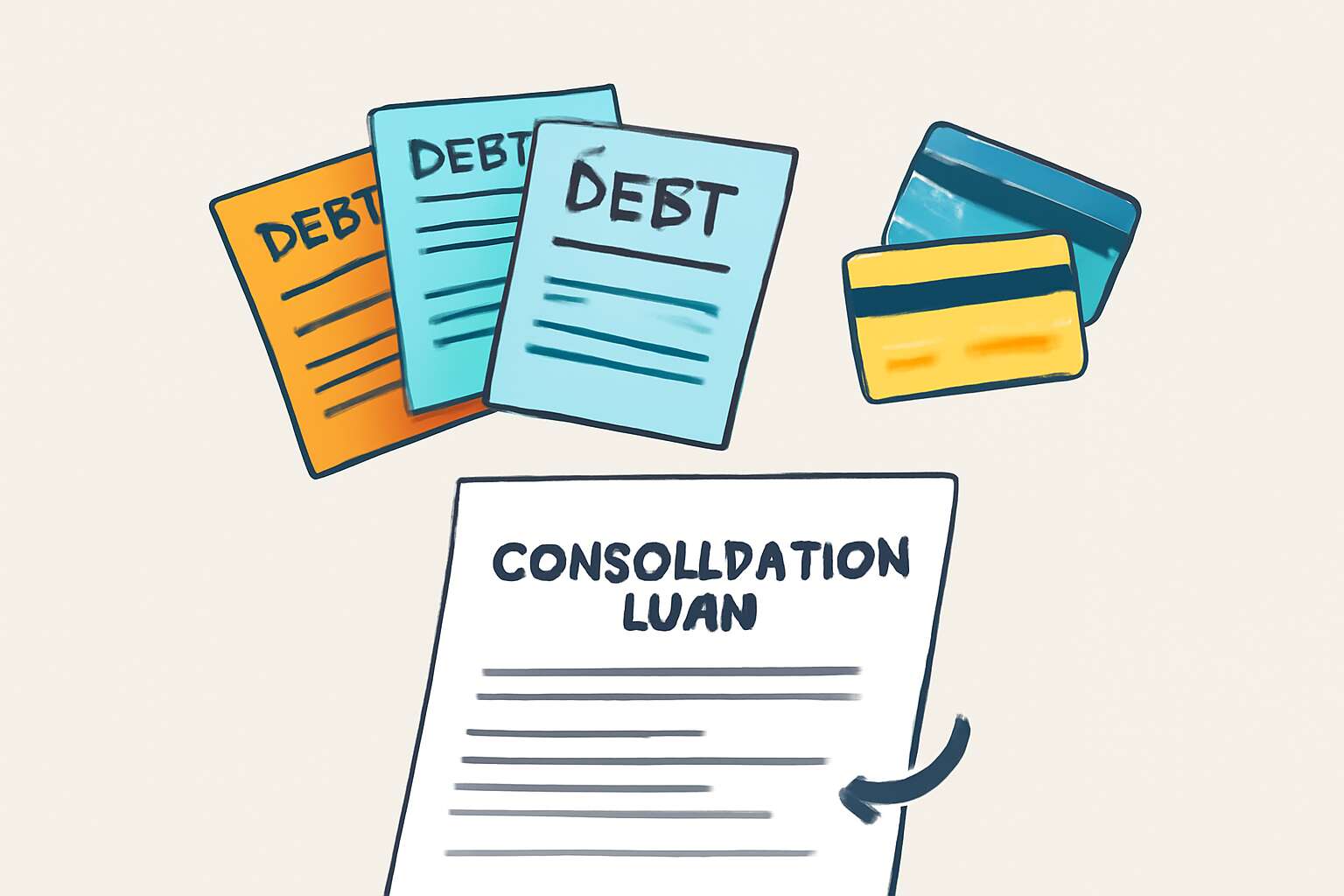
Understanding the concept of debt consolidation
What debt consolidation means
Debt can feel like a crowded room where every reminder chimes at once. A simple truth emerges when you pause: to define debt consolidation is to replace a chorus of payments with a single, predictable note. “Debt isn’t a mark of failure,” a local adviser often says; it’s a tangle that can be loosened with a clear plan!
I understand the concept as a practical tool for regaining financial breathing space. When you combine debts, you shift from juggling due dates to following a single timeline with a fixed rate, potential savings, and improved clarity.
- One monthly payment
- Fixed interest rate where possible
- Clear payoff schedule
For many South Africans, this shift changes daily life—less stress, more focus on goals, and a pathway toward long-term resilience. I’ve seen the relief of a single due date and clearer budgeting.
How it works in practice
Debt often arrives as a chorus of reminders; to define debt consolidation is to describe the shift from many reminders to one predictable note that keeps a household on beat. In South Africa, the daily bill rhythm can feel relentless.
In practice, it bundles multiple debts into a single arrangement—one monthly payment, often at a fixed rate—and replaces a tangle of due dates with a single, forward-looking timeline.
This can ease budgeting and stress, but it isn’t magic. The overall debt amount stays, and terms may stretch. Fees, qualification rules, and the impact on credit scores require careful consideration.
For many South Africans, that quieter rhythm opens space for longer-term goals and resilience—a practical cadence that makes tomorrow a little more legible.
Key terms to know about debt consolidation
Across South Africa, more than half of households juggle several debts each month, a chorus that can drown out tomorrow. To define debt consolidation, imagine a single, steady tempo that replaces a chorus of reminders with one reliable note. It promises relief without magic—just a practical rhythm that keeps family finances on track and dreams within reach.
Understanding the concept means knowing the terms that shape choices. Here is a concise glossary to guide conversations:
- Fixed rate vs. variable rate
- Unsecured vs. secured loan
- Repayment term
- Fees and qualification rules
- Credit score implications
Knowing these terms helps South Africans walk into conversations with clarity—no fog, just a path forward. To define debt consolidation is to see it as a single instrument that reframes debt as a schedule you can manage, not a maze you must endure.
Benefits and drawbacks of debt consolidation
Across South Africa, households juggle debt until the numbers drum a relentless beat. To define debt consolidation is to describe a single, steady tempo: one loan, one payment, one predictable rhythm that quiets the chorus of reminders and steadies tomorrow’s plans.
Benefits surface when one instrument replaces many:
- Simplifies finances with a single monthly payment
- Potentially lower interest than existing debts
- Fixed repayment term for clear budgeting
- Reduced emotional strain from juggling bills
Drawbacks remind that one note can mute other risks: extending the term can mean paying more interest in the long run, while upfront fees and qualification rules may narrow choices. In practice, a careful read of the terms matters.
Common myths about debt consolidation
Nearly one in five South African households is weighed down by debt, a quiet refrain that follows you home. To define debt consolidation is to trace a single, steady thread through the cacophony: one loan, one payment, one rhythm that promises relief without extinguishing the drama.
Understanding the concept means seeing more than a balance transfer. It can redraw the map of obligations into a single, predictable cadence—but myths cling like cobwebs. The most stubborn are:
- Myth: It eliminates debt instantly.
- Myth: It always lowers the total interest.
- Myth: It is a one-size-fits-all cure.
In practice, a careful read of the terms matters, and the idea of consolidation remains a blade with two edges: clarity and risk. The night is long; the ledger must be read with care.
Who should consider debt consolidation
Debt consolidation, at its core, is not a magic wand but a careful redraw of the ledger. In South Africa, nearly one in five households wrestle with debt, a quiet drumbeat that follows you home. To define debt consolidation is to distill a chorus of obligations into one steady rhythm: one loan, one payment, one due date that makes budgeting less theatrical and more manageable.
For whom does this concept work best? The idea suits those seeking clarity and smoother cash flow, not a cure-all. If several debts nag with varying rates and due dates, consolidation can offer a calmer march toward balance. Another way to define debt consolidation is to view it as a single path through multiple financial obligations.
- Several high-interest debts you want to simplify
- Multiple due dates disrupt budgeting
- Aiming for a fixed repayment schedule
Defining debt consolidation versus other debt relief options
Debt consolidation vs debt settlement
Debt can feel like a never-ending receipt trail, and in South Africa the craving for clarity is palpable. To define debt consolidation is to replace a chorus of monthly obligations with one predictable payment—usually to a single lender—hoping that simplicity buys momentum and steadier cash flow.
Debt consolidation vs debt settlement? The former streamlines the burden; the latter negotiates the balance down but can damage credit and invite tax quirks. In practice, consolidation prioritises ongoing repayment, while settlement courts a reduction, with consequences to timing and reporting.
Consider these contrasts in brief:
- One monthly payment replaces many
- Credit score effects differ
- Costs hinge on rates and fees
Either path can redefine your finances, provided you read the terms with a South African sensibility and a touch of theatrical restraint.
Debt consolidation vs debt management plan
To define debt consolidation for South Africans is to pull a storm into a single lantern—one predictable debtor’s beacon amid the murk of multiple obligations. It promises clarity, a quieter ledger, and the eerie relief of a fixed monthly cadence that buys time and steadier cash flow. I’ve witnessed how that single glow can hush the room when numbers threaten to howl!
Debt consolidation vs debt management plan reveals different destinies. A management plan is a counsellor’s choreography—ongoing oversight, negotiated repayments, and personal accountability—whereas consolidation seeks one instrument, one rate, and a streamlined path.
- One payment to a single lender can simplify timing.
- Credit score effects vary by approach and timing.
- Costs live in interest rates, admin fees, and potential penalties.
Across South Africa’s financial landscape, the choice is less about magic and more about matching tempo to circumstance.
DIY debt consolidation vs professional help
Debt wants a loud audience; a single lantern can steady the room. To define debt consolidation is to capture the idea of a single instrument that quiets a chorus of repayments. I’ve watched that glow hush a room when numbers threaten to howl.
DIY debt consolidation vs professional help? DIY can save on fees but demands patience, numbers, and a tolerance for risk. Professionals bring negotiation power and a broader menu of options, with safeguards and structure that keep nerves from fraying.
- DIY path: nimble and cost-conscious, demanding discipline and keen record-keeping
- Professional path: lenders negotiate terms, provide structure and safeguards
- Reality check: timing and credit impact vary by approach
Across SA, the choice hinges on temperament and timing more than magic; the lantern becomes brighter only when it fits the room.
Pros and cons of each option
Across South Africa, a chorus of monthly repayments can rise into static in a crowded room. To define debt consolidation is to describe a single instrument that threads those notes into one steady pulse. One plan, one due date, one rate—an idea that quiets the room when numbers threaten to howl!
Other relief options sketch different melodies. DIY consolidation offers nimble control but demands discipline; professional routes bring negotiation power and structure, yet may impact fees or terms.
- Pros: Simplified payments and budgeting clarity
- Cons: Possible fees and longer payoff
- Alternative risks: Credit score impact varies
Timing and temperament decide the fit; for South Africans, the best track shines when it matches daily life and long-term goals.
Eligibility factors for consolidation
Debt is a rhythm; when payments crowd the room, clarity falters. To define debt consolidation is to name a single instrument that threads many notes into one steady pulse: one plan, one due date, one rate. It offers tangible calm, a chance to breathe between numbers, and a choice about what kind of daily life you want to protect.
Eligibility factors for consolidation include:
- Stable income to cover the new payment
- Debt balance and credit history within lender limits
- Unsecured status and South Africa residency
Beyond consolidation, other paths exist; they arrive with different rhythms—sometimes sharper, sometimes gentler. The gatekeepers are risk, cost, and life reality; they determine who can lock the tempo and who must improvise!
Steps to define debt consolidation for your finances
Assess your debt profile and total owed
Debt sits as a quiet weight in many South African homes, where monthly commitments scatter like leaves in a wind—define debt consolidation as a thoughtful reassembling of those payments into one manageable stream. The first step is to assess your debt profile and total owed.
- Overview of every balance, rate, and deadline
- Summary of potential consolidation paths
- Affordability and timeline considerations
In this careful framing, readers glimpse how to align debt with a sustainable rhythm!
Check your credit score and how it affects rates
Debt is a weathered drumbeat in many South African homes. To define debt consolidation is to see a path where payments align into one manageable rhythm—and I’ve watched this approach restore balance to budgets.
Check your credit score, the mirror of your borrowing power. In South Africa, lenders weigh your score with care; a higher score can unlock better rates, while lower scores may invite higher costs and tighter terms.
Steps to define debt consolidation:
- Gather every balance, interest rate, monthly payment, and due date.
- Weigh consolidation paths—a personal loan, a balance transfer, or a top-up on a home loan—and their true costs.
- Forecast affordability and payoff timeline with a practical budget.
With those pieces in place, you can set a sustainable rhythm for your finances—less frantic, more forward.
Gather loan terms and options from lenders
In South Africa’s lending chorus, the first step toward clarity is to know what to compare. To define debt consolidation, gather terms from several lenders and listen for the hidden costs—the interest that compounds, the fees that add up, and the true payoff date. This process shines a light on options such as a personal loan, a balance transfer, or a home-loan top-up, letting you see which path aligns with your budget and your long view.
Here are the dimensions to weigh:
- Total cost of credit over the term, including all fees
- Repayment flexibility and any penalties for early payoff
- Impact on monthly cash flow and affordability within your budget
With those figures in view, you’ll map a rhythm that keeps commitments manageable and dreams within reach—without sacrificing the heart of your finances.
Choose a consolidation method that fits your goals
Debt is the story you tell about tomorrow, and in South Africa many households write hopeful chapters. A trusted SA adviser notes, “Debt is the story you tell about tomorrow,” reminding readers that numbers carry a human pace. To define debt consolidation, start with a clear why and a single destination—transform scattered payments into one manageable path that fits current budgets and future dreams.
Steps to define debt consolidation unfold as thoughtful, not rushed, with these elements guiding the choice:
- Key elements to compare: interest rates, fees, and payoff dates.
- Impact on monthly cash flow and affordability within the budget, avoiding future strain.
- Long-term alignment with goals, considering how a chosen route reshapes debt freedom timelines.
With these considerations in view, the options—personal loan, balance transfer, or a home-loan top-up—appear not as traps but as instruments, each humming a different cadence toward clarity and control.
Calculate potential savings and monthly payments
Debt is the story you tell about tomorrow, and the ending depends on the path chosen. To define debt consolidation, start with a clear why and a single destination—turn scattered payments into one manageable rhythm that fits today’s budget and tomorrow’s dreams. In South Africa, careful planning turns numbers into a steady, human pace.
Steps to define debt consolidation unfold thoughtfully. Consider these moves:
- Calculate potential savings and monthly payments to see what you can actually afford.
- Model how each option reshapes cash flow and the timeline to debt freedom.
- Ensure long-term goals aren’t buried by fees or interest, but supported by a sustainable plan.
Create a realistic plan and timeline
Debt is a map; define debt consolidation as the route that turns scattered due dates into one steady rhythm. In South Africa, a clear why and a single destination transform numbers into a humane pace—today’s budget, tomorrow’s dreams.
Steps to shape the concept unfold thoughtfully. Consider these guiding ideas:
- A clear why and a single destination for your finances.
- A view of how the timeline to debt freedom fits your life.
- Awareness of fees and interest to keep the plan sustainable.
By keeping the narrative human—where numbers serve people, not reverse them—you create a plan that feels possible, not punitive, and you keep moving toward a calmer, steadier financial horizon.
Choosing lenders and avoiding scams when defining debt consolidation
How to compare lenders and offers
Choosing lenders smartly begins with knowing what define debt consolidation means in practice. When you define debt consolidation, you want transparent terms, clear fees, and a repayment plan that fits your budget. A South African financial watchdog notes that many offers look glossy but conceal costs. The aim is to separate legitimate providers from scams and avoid chasing promises that don’t add up.
- Licensed or registered with the appropriate SA authorities (like the National Credit Regulator or a reputable FSCA-registered lender).
- Fees disclosed up front and in writing, with a clear breakdown of total repayment.
- No pressure to sign immediately or to accept unofficial guarantees.
- No requests for upfront payments or to share sensitive information before a formal offer.
Credible lenders publish written quotes and answer questions plainly.
Red flags of consolidation scams to watch for
A South African financial watchdog notes that glossy loan offers often hide costs. When choosing a lender, tread carefully and verify credentials. To define debt consolidation clearly, you should demand transparent terms, upfront fees disclosed in writing, and a repayment plan that fits your budget.
Red flags to watch for include:
- Upfront fees or deposits not disclosed in writing
- Pressure to sign immediately or promises of guaranteed approvals
- A lender not licensed or registered with SA authorities
- Requests for sensitive information before you receive a formal offer
Credible lenders publish written quotes and answer questions plainly, allowing you to compare terms without surprises. When in doubt, pause, check registration, and seek independent advice before proceeding.
Important disclosures and fees to review
Debt is loud; a good lender is quiet—terms should read like a menu, not a maze. When you define debt consolidation, you want clarity, not camouflage. In South Africa, credible lenders publish written quotes and stand behind their numbers.
Disclosures to review include upfront charges, the interest structure, total repayment, and penalties. Replace jargon with plain English so you can compare offers without surprises.
- Upfront fees disclosed in writing
- Written quotes and clear cost breakdown
- Licensed or registered with SA authorities
When in doubt, pause and seek independent advice before proceeding. Credible lenders answer questions plainly, letting you see the real cost of consolidation.
Strategies for securing affordable interest rates
“Clarity is currency in a market of numbers,” a South African adviser likes to say. In a world where debt can creep like fog, a single clear quote cuts through. To define debt consolidation, imagine replacing several payments with one predictable figure. When choosing lenders, seek transparency: written quotes, plain-language fees, and licensing or registration with SA authorities. A credible offer reads like a menu, not a maze.
- Licensed or registered with SA authorities
- Written quotes and clear cost breakdown
- Plain language, no pressure tactics or hidden fees
If doubt lingers, pause and ask questions until the cost is crystal. Credible lenders answer plainly, letting you see the real cost of consolidation.
Predatory lending pitfalls and how to avoid them
To define debt consolidation, imagine gathering several debts into one predictable payment—and suddenly, the fog lifts. In South Africa, the right lender shines with transparency: licensed or registered with SA authorities, written quotes, and plain-language cost breakdowns. A credible offer reads like a menu—clear, straightforward, and free of pressure tactics or hidden fees. If a quote sounds perfect, press for specifics: the total payoff date, all charges, and the true interest rate. Clarity is your shield against costly mistakes.
Red flags to watch for include aggressive sales pitches, vague disclosures, upfront payments, or terms that shift after signing. Ask questions until the cost is crystal; credible lenders answer plainly. Consider this quick checklist:
- Licensing or registration status with SA authorities
- Written quotes with a clear fee breakdown
- No high-pressure tactics or rushed deadlines
- Transparent payoff dates and no hidden penalties



0 Comments