
Assessing Your Debt Situation
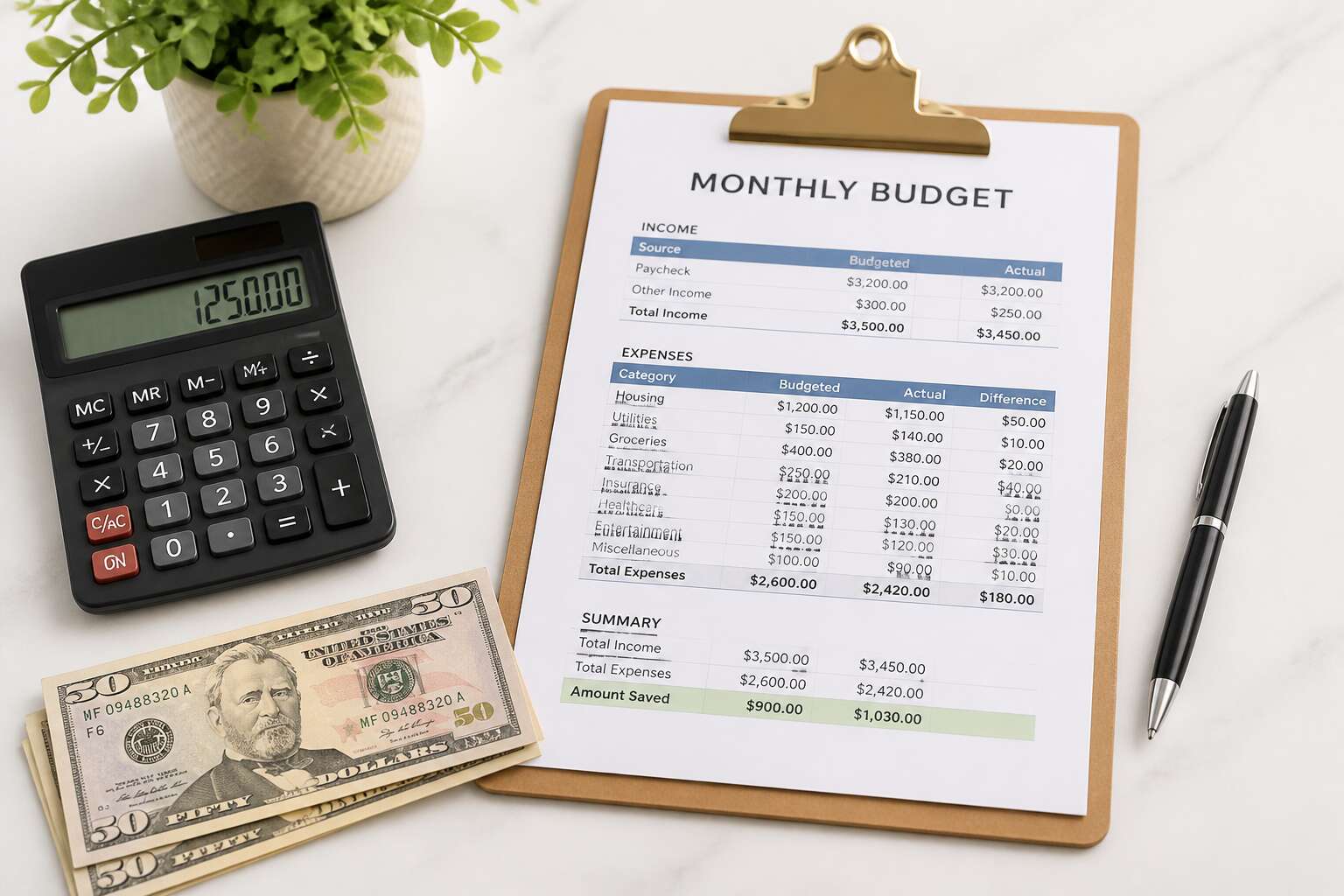
Calculating Your Total Outstanding Balances
Most people avoid the exact number because they dread what it will reveal. I understand that impulse. But the calculation is where plans begin. Write down every account, every store card, every personal loan. Yes, every single one! The figure might shock you, and that shock has a purpose.
To get an accurate total, gather your latest statements and note the following:
- The outstanding balance on each account
- The interest rate attached to each debt
- The minimum monthly payment required
Once you have those figures, add the balances. That single sum is your baseline. Compare it against a debt consolidation under 5000, and you see whether the option works for your situation. You also see which high interest accounts consume your monthly income. A debt consolidation under 5000 cannot fix unclear numbers, so clarity comes first.
Reviewing Interest Rates and Monthly Payments
Interest rates determine how much of each payment reduces your principal. In South Africa, credit card interest often exceeds 20%. That rate can reduce the benefits of a debt consolidation under 5000.
Monthly payments need the same attention. In my experience, minimum payments often fail to reflect the true cost. If you pay only the minimum, compounding interest works against you. Review every statement for the rate, due date, and minimum amount! This clarity shows where your money goes each month.
- Identify which debts carry variable interest rates
- Look for hidden penalty fees on accounts
- Compare total monthly obligations to your income
This comparison informs your decision. A debt consolidation under 5000 must reduce your monthly outflow. Without this review, you miss the real leverage.
Determining If Consolidation Is Right for You
Assessing your debt situation is less about arithmetic and more about honesty. A debt consolidation under 5000 only works when you confront the habits that created the balances. In my experience, many South Africans treat borrowing as a social ritual, a way to keep appearances. The question is not whether you qualify, but whether you can trust yourself to change.
Consider how debts affect your daily life. Do you check your bank app with dread? Do you avoid answering calls from your credit provider? These small signs matter. Consolidation simplifies your obligations, but it cannot alter your spending behaviour. If your lifestyle remains unchanged, you may find yourself back where you started, with a cleaner account and a fuller circle of debt.
Exploring Consolidation Options
Personal Loans for Smaller Amounts
Most lenders advertise big-ticket loans, yet the demand for smaller amounts is real. In South Africa, personal loans for R5,000 or less come from traditional banks, microfinanciers, and digital lenders. Each option carries trade-offs. Banks check credit history deeply, while digital platforms use transaction data for rapid approval. Microfinanciers offer flexible terms, but their effective rates run higher.
For a debt consolidation under 5000, several factors determine a loan’s suitability:
- Total cost, including initiation fees and monthly service charges.
- Repayment period and its alignment with the salary cycle.
- Lender permission for early settlement without penalties.
A smaller personal loan for debt consolidation under 5000 can merge store cards and overdrafts into one predictable instalment. True benefit emerges only if the new interest rate sits below the combined rates already being serviced. From my experience, borrowers who compare quotes from at least three lenders gain a clear sense of their standing.
Balance Transfer Credit Cards with 0% APR
Zero percent APR balance transfer cards offer a genuine window for debt consolidation under 5000. They shift store card and overdraft balances onto one credit card with zero interest. The catch is the fee. Banks charge 4% to 5% of the amount moved. On R5,000, that is R200 to R250. I have watched borrowers miss the revert date and get burned.
The promotional rate rarely lasts beyond 12 months. After that, the standard rate applies, often above 20%. Divide the balance by the remaining months and commit to that payment. Miss one month, and the rate reverts early.
- Check the balance transfer fee and how it is calculated.
- Confirm the length of the 0% period.
- Ask for the standard rate after the promo ends.
The card makes sense only when the fee plus future interest stays below your current costs. For a debt consolidation under 5000, the math is tight. Run it before you sign.
Credit Union Debt Consolidation Programs
Credit unions charge, on average, two to three percentage points less than commercial banks. That gap becomes meaningful when you are exploring debt consolidation under 5000. I have watched members walk into these institutions expecting a bank-style runaround. Instead, they find an officer who reviews the entire ledger, not only a credit score.
For anyone weighing debt consolidation under 5000, the credit union approach offers something less visible: obedience to a co-operative mandate. In South Africa, these institutions operate under the Co-operatives Act, which shapes their fee structures and their willingness to negotiate.
Here is what stands out:
– Loan fees that remain clear from the first quotation.
– Repayment dates aligned with your payday.
– A genuine appraisal of your income and expenses.
The overlooked advantage is forbearance. When your circumstances change, the credit union will adjust the repayment plan. Mainstream lenders rarely offer that courtesy.
Peer-to-Peer Lending Platforms
Peer-to-peer lending platforms have shifted the old hierarchy of borrowing. Where banks once controlled access to credit, these digital marketplaces let individual investors fund your debt consolidation under 5000 directly. In South Africa, platforms such as RainFin and Lendico have matured into credible alternatives.
The approval process examines more than your credit score. Some platforms weigh your earning potential and spending behaviour with a granularity that traditional lenders ignore. That nuance matters when you need debt consolidation under 5000 and do not have a pristine record. I have seen funded loans land in under 24 hours!
- Loan terms from three to thirty-six months
- Interest rates set by investor competition, not by a single bank
- No early settlement penalties on most plans
You still face a hard credit check. However, the platform’s algorithm assesses a broader picture of your finances. For many South Africans, this difference determines whether small debts stay contained or multiply.
Comparing Costs and Benefits
Lowering Your Overall Interest Rate
Lowering your overall interest rate on a debt consolidation under 5000 directly changes how much of your payment goes to interest. The costs are upfront, often an origination fee or a transfer charge, but the benefits accumulate quietly each month. I have seen borrowers shave off two or three percentage points, which on a small principal still yields meaningful relief.
- Administrative fees that shrink your effective loan amount
- Potential penalty for closing the original account
- Monthly savings that compound over the repayment period
The arithmetic is unromantic but decisive. When the interest rate drops, your payment structure shifts, and the debt stops feeding itself. That is the real benefit, not a lower number on a statement.
Simplifying Multiple Payments into One
Handling five separate due dates creates room for error. A single monthly payment changes that. For a debt consolidation under 5000, the tradeoff is usually administrative, not mathematical.
Before you commit, compare what you gain against what you lose.
- One due date instead of several
- A single interest rate to track
- Possible origination fees on the new loan
The costs are concrete. The benefits show up in fewer late fees and less stress. I have seen people pay off small debts faster simply because they stopped juggling. That is a real advantage, not a trick.
Potential Fees and Origination Charges
Origination charges hide in the fine print. Ask about them before you sign. These upfront costs, often 1% to 5% of the loan, can erode the benefit of a debt consolidation under 5000. A R4,000 loan with a 5% origination fee costs R200 before you even receive it. That is not a deal breaker, but it changes your math.
- Origination fees deducted from your payout
- Late payment penalties on the new loan
- Monthly administration fees on some accounts
Compare those against what you save in interest. For a debt consolidation under 5000, a small fee might be worth one predictable due date. I always ask for a written breakdown. If the fee feels like a hidden tax, walk away. The right loan should cost less than the chaos it removes.
Impact on Your Credit Score
Every credit inquiry for a debt consolidation under 5000 causes a small decrease in your score. That decrease fades within months. The real damage comes from late payments, which linger for seven years. A single consolidated loan simplifies your calendar, reducing the chance of a missed due date.
Compare the temporary cost to the long-term gain. If your new loan lowers your credit utilisation below 30%, your score may climb within half a year! I have watched clients recover and surpass their old numbers. The consolidation under 5000 becomes a practical tool for financial discipline. That trade-off is worth the paperwork.
Risks of Secured Loans for Small Debts
Using your home or car as collateral for a modest financial rearrangement carries a weight that many South Africans underestimate. A secured loan for a debt consolidation under 5000 transforms an unsecured obligation into a potential threat to your primary assets. The lender holds a legal claim over your property, which remains in place until the final cent is repaid.
The benefits are immediate and tangible. Secured products typically offer lower interest rates because the risk transfers to you. This means a larger portion of your monthly instalment attacks the principal amount. Yet, the fundamental danger lies in the asymmetry of the arrangement. If you lose your job or face an unexpected medical emergency, the bank can repossess the asset to settle the debt.
Consider the specific risks before you sign:
– The full loan amount becomes due immediately if you default on a single payment.
– Your credit record receives a permanent judgment notation that cripples future borrowing power.
– You lose negotiating leverage if you fall behind, as the repossession process moves swiftly in South African courts.
The interest saved rarely outweighs the possibility of losing a vehicle that transports you to work. I have observed clients who saved 4% annually but exposed themselves to catastrophic loss. A debt consolidation under 5000 should never place your family’s shelter or your sole means of income at risk. The psychological burden of knowing a bank can seize your property often induces more financial stress than the original debts ever did. If you cannot secure better terms without offering collateral, the consolidation may be a poor bargain.
Qualifying and Applying
Minimum Credit Score Requirements
When the sum is modest, say under five thousand rand, lenders often become surprisingly fussy. Your credit score still gets scrutinised, sometimes more so because the profit margin is thin. For debt consolidation under 5000, most banks and online lenders look for a score above 580, though some credit unions are gentler.
Qualifying hinges on your payment history, not just the number. A clean record with no missed instalments over six months helps. If your score sits lower, consider a smaller loan amount or a co-signer.
- Check your latest credit report for errors.
- Bring proof of income for the last three months.
- Expect a hard inquiry that may dip your score by a few points.
Applying takes ten minutes, but the approval decision might reveal a preference for borrowers with steady salaries. That is the social nuance of small debt: everyone wants to help, but only if you look reliable.
Debt-to-Income Ratio Considerations
South Africans carry one of the highest household debt burdens on the planet, with the Reserve Bank tracking debt to disposable income near 62%. That statistic matters more than you might expect when you apply for debt consolidation under 5000!
Your debt-to-income ratio often decides the outcome before you finish the application. A ratio above 40% signals distress, even when your credit score looks acceptable. Lenders reviewing debt consolidation under 5000 examine every bond, store card, and microloan against your payslip.
Here is what shifts the calculation:
- Stable employment spanning two years or more
- Rental payments that demonstrate consistent housing costs
- No recent credit applications within the last three months
I have watched applicants with modest salaries secure approval simply because their existing commitments left breathing room. The ratio, not the amount, reveals your true reliability.
Gathering Required Documentation
Gathering the right paperwork makes the difference between a quick approval and a week of back and forth. Lenders offering debt consolidation under 5000 want proof of income, residence, and existing liabilities before they commit.
The list is shorter than you think:
- Three months of bank statements
- A recent payslip or letter from your employer
- Your ID document and proof of address
- Statements for each debt you plan to consolidate
You do not need a bond statement or tax returns for amounts this small. When you apply for debt consolidation under 5000, the lender simply needs to see that your income covers your obligations and that the debts you list are real. Keep copies of everything you submit. A missing payslip is the most common reason applications stall.
Pre-Qualification vs. Hard Credit Pull
Pre-qualification for debt consolidation under 5000 typically begins with a soft credit check. This inquiry lets you gauge your rate and term without leaving a footprint on your credit profile. A hard credit pull, by contrast, only occurs when you formally submit your application.
The order matters. For debt consolidation under 5000, lenders use pre-qualification to filter applicants, then conduct a hard pull to verify the details. The soft check examines your payment history and current accounts. The hard pull digs deeper into your full credit file and affordability.
What this means for you:
– Your credit score stays intact while you compare offers.
– The hard pull only happens when you are ready to commit.
– A small consolidation loan rarely requires more than one hard inquiry.
Most South African lenders keep the hard pull for the final stage, so you can shop around without penalty. For debt consolidation under 5000, the process is straightforward: qualify softly first, then apply with confidence.
Choosing a Lender with Favorable Terms
I have reviewed many small loan offers, and the best deal rarely sits with the first lender. Choosing a lender for debt consolidation under 5000 comes down to comparing how each one handles small balances. Some lenders apply the same fees to a R5,000 loan as they do to a R50,000 loan, which kills the benefit.
Check the annual percentage rate, the initiation fee, and the monthly service charge. Together these figures reveal the true cost of debt consolidation under 5000.
- Shorter terms mean higher monthly installments but lower interest.
- Longer terms ease cash flow but add interest over time.
Apply only when the terms fit your budget. Submit the documents, complete the process, and confirm the offer letter states every charge.
Avoiding Predatory Lending Practices
Qualifying for debt consolidation under 5000 often hinges on your credit score and income stability, but the application process hides traps. I have seen lenders who advertise low monthly payments yet bury origination fees that swallow the entire benefit. Before you sign, scrutinise the contract for section 129 notices or early settlement penalties.
- Unlicensed lenders demanding upfront payment
- Offers that change after a hard credit pull
- Pressure to accept a loan larger than your debt
These red flags signal predatory practices. Stick to registered credit providers under the National Credit Act. When you apply, submit only certified documents and verify the lender’s registration on the NCR database. Debt consolidation under 5000 works when the lender respects your balance, not when they exploit it.
Executing Your Consolidation Plan
Paying Off Existing Debts Directly
Once your consolidation loan is approved and the funds land in your account, the real work begins. You must pay off each creditor directly, rather than spending the money elsewhere. This step determines whether your debt consolidation under 5000 actually changes your financial trajectory.
Start with the highest interest accounts first, as they drain your resources fastest.
- Settle store cards immediately, they carry punishing rates
- Clear personal loans before they accrue further interest
- Pay off credit cards to free up your revolving balance
Each payment should be traceable. Use EFT and keep your proof of payment. Creditors often need written confirmation that you settled the account in full. Without this, your debt consolidation under 5000 remains incomplete on paper, regardless of what your bank balance suggests.
Setting Up Automatic Payments
Once every old account is settled, the consolidation loan itself demands discipline. Setting up automatic payments turns that promise into a mechanical habit. You authorize your bank to deduct the monthly instalment on a fixed date, which strips away the risk of forgetting, or worse, prioritizing other expenses.
I prefer scheduling the payment the day after payday, so the money never lingers temptingly. And if your lender offers reductions for autopay, take them. That small drop in interest compounds over months. For a loan like a debt consolidation under 5000, the margin matters.
- Confirm the debit order with your bank
- Align the date with your salary arrival
- Keep a buffer for unexpected charges
This automation does not erase the loan, it simply removes human error from the equation. Each month, the payment vanishes silently, and your balance charts its own downward path.
Building Healthy Financial Habits
The true test of a debt consolidation under 5000 arrives after the old accounts close. The loan sits there, silent, waiting. I have seen people slip back because they mistake the quiet for completion. That is a mistake.
Budgeting becomes a ritual. Every rand needs a purpose before the month starts. I track my spending weekly, not daily, to avoid obsession. Seeing the balance drop each month gives me a strange satisfaction. It is proof the plan works!
- Review your budget every Sunday
- Move extra funds straight to the loan
- Keep one emergency buffer account
These habits protect you from the overspending that created the debt. The loan shrinks, and so does the temptation to borrow again.
When to Consider Alternatives
Negotiating with Creditors for Lower Rates
Negotiating with creditors for lower rates often works better than a new loan when your debts are small and your credit history has a few rough patches. Lenders would rather collect something than write off the account!
This option shines when you owe money on one or two accounts. A successful negotiation might include:
- Requesting a lower annual percentage rate.
- Asking for a waived late fee.
- Proposing a fixed monthly amount.
I have seen creditors agree to a 2% rate cut for a polite request. This approach avoids the approval process and preserves your existing credit lines, making it a sensible alternative to debt consolidation under 5000. For small balances, such a negotiation is often quicker and cheaper.
Using a Debt Management Plan
Sometimes debt consolidation under 5000 is not the right tool. If you owe R4,300 across three credit accounts, a debt management plan, an arrangement with a credit counselling agency, can work better when your problem is discipline, not interest rates. The agency negotiates with creditors and bundles the payments into one monthly instalment.
Your credit accounts get closed during this process, which sounds harsh but does stop further swiping. Choose this route when you need an intermediary to argue on your behalf, or when your credit score is too damaged for a new loan.
Consider a debt management plan if:
- You struggle to manage multiple due dates.
- Your income is reliable but your willpower is not.
- You prefer a supervised payoff over a fresh loan.
Where debt consolidation under 5000 settles your balances immediately, a debt management plan provides ongoing structure. Match the method to your situation.
Snowball vs. Avalanche Payoff Methods
Debt consolidation under 5000 settles your balances immediately, yet sometimes the wiser route is to face each creditor alone. The snowball method orders your debts from smallest to largest, extinguishing the tiniest flame first. The avalanche method prioritises the highest interest rate, a colder calculation that saves you more over time. Choose snowball when you crave early victories. Choose avalanche when your discipline can withstand a longer wait.
Consider these alternatives when:
- Your outstanding amounts are few and manageable.
- You wish to avoid opening new credit lines.
- You require psychological momentum rather than structural change.
Neither method erases your obligations. They simply rearrange the order of suffering, and that ordering can make all the difference.
When Bankruptcy Might Be an Option
A shadow falls when debt exceeds your capacity. Debt consolidation under 5000 offers a structured path for the disciplined, but it cannot conjure money that does not exist. I have watched individuals apply for yet another personal loan while their bond repayments crumble. This is the moment to pause. Sequestration, the South African term for bankruptcy, is a legal process that cancels your obligations, yet it leaves a mark on your record for years. Consider this alternative when your monthly shortfall is a gap you cannot close.
The signs appear in sequence:
- Your total unsecured debts exceed your annual salary.
- Creditors have obtained final judgements against you.
- You have no disposable income after essentials.
If debt consolidation under 5000 cannot cover the balance, sequestration becomes a somber arithmetic. It is not a fresh start. It is a hard reset, with a cost!



0 Comments