
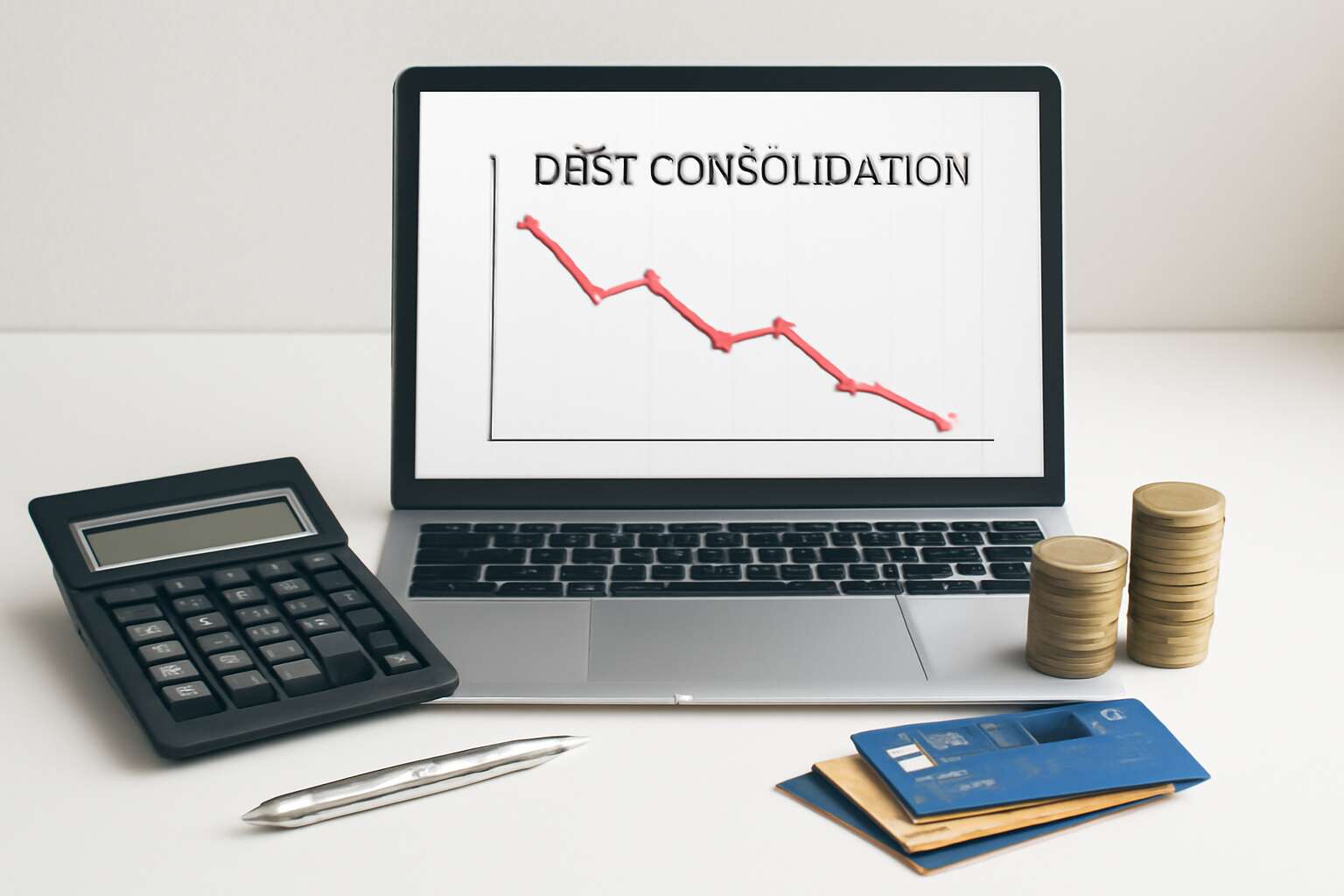
Understanding Debt Consolidation: Core Concepts
What debt consolidation means
Debt is more than numbers; it shapes decisions, relationships, and the life you build in South Africa. Understanding debt consolidation reveals core concepts: it is not a magic wand but a strategic move that can streamline payments, lower stress, and clarify your path forward. When you weigh it, focus on the math, term lengths, and how fees align with your income.
- Single monthly payment can simplify budgeting
- Potentially lower interest rates vs. multiple debts
- Watch for fees and lengthening terms that lock you in
In practice, core concepts include comparing total interest across plans, evaluating whether you maintain discipline to avoid new debt, and understanding repayment timelines. The question of debt consolidation good or bad hinges on whether the math justifies the costs. Debt can shape you, but choice can reshape debt.
Common methods of consolidation
Debt is the weather system of your finances—unpredictable, powerful, and always changing! In South Africa, a single bill can tilt your plans for weeks, and a stormy month can reset the forecast.
The question debt consolidation good or bad hinges on whether the math justifies the costs. Core concepts include comparing total interest across plans, watching term lengths, and guarding against new debt while you reorganise payments. A single monthly payment can simplify budgeting, potentially lower interest rates, and, yet, beware fees that stretch terms.
- Consolidation loan from a bank or credit union
- Balance transfer to a card with a promotional rate
- Debt management plan with a reputable counsellor
In practice, I weigh total costs, repayment timelines, and the discipline to avoid new borrowing—truths that echo real-life decisions.
How interest rates and terms affect total cost
“Debt is the weather that never seems to clear,” a South African debt counsellor told me once. I’ve learned that understanding debt consolidation reveals basic realities—how interest rates and term lengths shape the bill, and how a monthly payment can restore predictability to the bills.
In practice, shorter terms slam the table with higher monthly payments but cut total interest; longer terms soften the dues and may cost more over time. This is the math that decides if debt consolidation good or bad.
- Interest rate impact on total cost
- Term length and total repayment
- Risk of new borrowing
From where I sit, the decision rests on total costs, repayment timelines, and the discipline to avoid taking on fresh debt—qualities I’ve seen in steady hands and patient hearts across fields and towns. The question lingers in the air as readers weigh their options.
Who is a good candidate for consolidation
“Debt is the weather that never seems to clear,” a SA debt counsellor once said. Debt consolidation, at its core, is about simplifying payments into one predictable flow while keeping costs aligned with real income. It’s about clarity, not magic.
So who is a good candidate for consolidation? Those juggling multiple balances with different due dates, and a steady income that supports one payment. In that sense, debt consolidation good or bad hinges on total cost, term, and discipline—not wishful thinking.
Key traits often seen in stable candidates:
- Regular income and a manageable debt load
- Willingness to close old accounts and avoid new borrowing
- Clear expectations with a fixed repayment term
For South Africans, the numbers tell a story, but family and community context matter too. The core questions stay: cost, timeline, and restraint.
Debt consolidation vs. debt settlement vs. bankruptcy
“Debt is the weather that never seems to clear,” a SA debt counsellor once said. Understanding debt consolidation means weighing one predictable payment against fluctuating rates and due dates. Core concepts hinge on cash flow, credit impact, and clarity.
To picture the terrain, here are the core distinctions!
- Debt consolidation merges multiple balances into one payment, often with a single rate and term.
- Debt settlement negotiates reduced balances with creditors, which can affect credit history and reporting.
- Bankruptcy provides legal relief from certain debts, with lasting consequences and eligibility rules.
In the South African context, readers often ask whether debt consolidation good or bad. I’ve seen the answer hinge on cost, timeline, and discipline—whether the plan delivers predictability without trading one shadow for another. The question remains: debt consolidation good or bad, depending on how it reshapes your outlay and resolve.
Evaluating Pros and Cons
Potential savings and simplified payments
Across South Africa, debt consolidation can reshape monthly budgets—but is debt consolidation good or bad? “Debt is a tool, not a trap,” a financial adviser notes, and pooling debts can reduce clutter and simplify tracking, often with a lower rate. The catch is real: longer terms can increase total interest and widen fees if not carefully compared.
- Potential savings if a lower overall rate is secured
- Simplified payments with a single due date
- Hidden costs and longer payoff timelines are possible
To evaluate, consider the total cost, not just the monthly payment. If the new plan carries marketing-friendly terms or high setup fees, the apparent relief may fade quickly.
Risks: fees, interest, and longer payoff periods
Debt can be a tool, not a trap,” a financial adviser notes. In South Africa, debt consolidation can reshape monthly budgets, but the risks hide in plain sight: fees, interest, and longer payoff timelines can quietly erode savings.
Key risks to watch for include:
- Fees and setup costs that inflate the first bill
- Marketing-friendly rates masked by higher ongoing interest
- Longer payoff periods that keep paying more overall
To weigh the picture, focus on the total cost, not the monthly relief. If terms seem generous but the true price climbs with fees, the advantage fades quickly. Ultimately, debt consolidation good or bad hinges on transparent terms and the real cost, not marketing promises.
Impact on credit score
A startling statistic in South Africa shows one in three households carries debt, a quiet gravity that shapes every decision. When weighing debt consolidation good or bad, the credit score becomes the silent judge—notionally a number, yet a mirror of behavior and timing. The right move can steady payments; the wrong move can fray your score beyond repair.
- Short-term: new credit inquiries and account openings can cause a temporary dip.
- Long-term: on-time payments and closing or restructuring accounts may improve overall credit health.
Focus on consistency, not buzz. The true test is whether the consolidation plan preserves responsible habits while lowering overall cost and keeping credit lines intact.
When consolidation may not be the best option
Debt can feel like a crowded room where every voice is a reminder of what’s owed. In South Africa, many households live with the quiet gravity of debt shaping every choice. Debt consolidation good or bad often hinges on whether the plan preserves discipline and actually lowers costs.
Pros and cons glare in equal measure. When consolidation may not be the best option, the numbers can still be stubborn.
- Hidden fees and the true cost of extending payoff periods
- The risk of simply shifting debt instead of reducing it
- A false sense of progress that weakens budgeting habits
Ultimately, the decision rests on the broader arc of financial health. The true test is whether the arrangement harmonizes with a culture of responsibility rather than a temporary fix.
Types of Debt Consolidation Options
Bank loans and personal loans for consolidation
Debt isn’t only numbers; it’s time, attention, and that stubborn stress that follows you home. In South Africa, many households juggle multiple payments, and the question of debt consolidation good or bad lingers like a decision you can’t unmake.
Bank loans and personal loans offer different consolidation paths. Bank loans tend to fixed terms and predictable installments; personal loans can be easier to access with quicker approval. Across SA, terms, fees, and eligibility vary.
When evaluating these options, consider:
- Interest rate structure and overall affordability
- Repayment term and the monthly burden
Ultimately, the choice blends numbers with psychology—tight discipline or more flexibility. Either path can quiet the noise of debt, if costs and payoff horizons stay clear.
Balance transfer credit cards
“The cheapest debt is the one you never take,” a line I hear echoing through SA living rooms. Debt can feel like a specter. Many ask: debt consolidation good or bad? Balance transfer credit cards offer a glow of relief when high rates creep in and the balance shivers to zero in a promo window.
These cards let you move debt from costly lenders to a new card with a 0% or low introductory rate. The catch? Transfer fees and the clock running on the promo period. If the balance isn’t paid off before the rate jumps, the old debt returns with vengeance.
- 0% APR period advantages
- Transfer fees and limits
- Post-promo rates and credit impact
Used wisely, balance transfer strategies can quiet the debt noise; mismanaged, they lure you into a longer wait for payoff.
Debt management plans with credit counseling
Types of debt consolidation options present a spectrum of potential relief for South Africa (SA) residents. A debt management plan with credit counselling stands out as a structured route: a registered debt counsellor negotiates with creditors to convert multiple payments into one manageable monthly sum.
These plans can stabilise cash flow, but they come with trade-offs. They may affect access to new credit and can extend the payoff timeline if penalties aren’t fully removed; fees exist, and strict budgeting is part of the package. Is debt consolidation good or bad? The answer hinges on whether the overall cost drops and you stay disciplined.
Home equity consolidation (HELOC or refinance)
Is debt consolidation good or bad? In South Africa’s rural heartland, a single, well-structured loan can knit together rising bills and keep the lights on. Home equity consolidation through a HELOC or refinance uses the equity in your home to secure a new loan that pays off existing debts, leaving you with one predictable monthly payment.
For homeowners with solid equity, this option can lower interest and simplify cash flow. Yet it isn’t without risk: if rates rise or discipline slips, there’s more at stake than missed dinners—your home could be at risk. Fees, appraisal costs, and a longer payoff timeline may apply.
- One payment simplifies budgeting and can reduce overall interest.
- Secured debt increases the risk to your home if repayments falter.
401(k) loan considerations
Debt consolidation options shimmer like a starfield, each path promising steadier budgeting and lighter burdens. A 401(k) loan, in particular, glows with opportunity: borrow from retirement funds now, repay yourself with interest, and sidestep external lenders. “The clever path is the one that safeguards your future,” says a seasoned adviser, and that wisdom guides many South Africans weighing debt consolidation good or bad.
When weighing a 401(k) loan, consider these factors:
- Plan rules and borrowing limits vary by employer.
- Repayment is usually via payroll deductions and reduces take-home pay.
- Leaving the job can trigger loan repayment and potential tax consequences.
- Opportunity cost: retirement funds lose compounding growth while the loan stands.
Beyond the 401(k) option, other routes drift like choices on a map—each with its own rhythm and risk. That map reveals trade-offs and long-term considerations rather than easy shortcuts.
How to Choose the Right Lender
Shopping for rates and terms
Across South Africa, more than half of indebted households report feeling overwhelmed by repayments, juggling due dates and shifting interest. When choosing a lender, honesty and listening matter as much as numbers — it’s about finding a partner who speaks plainly and stands by their promises.
Look for licensing, transparent fees, and responsive service—these signals separate trustworthy lenders from the rest.
- Licensed and regulated by the National Credit Regulator (NCR) or other SA authorities
- Clear, itemized fee structure with no hidden charges
- Flexible repayment options and accessible, empathetic customer support
Consider the broader question: debt consolidation good or bad depends on how well the lender aligns with your financial reality and your values. A prudent match can ease stress and restore balance to daily life, without clouding what truly matters.
Understanding fees and penalties
When comparing lenders, the sticker price matters as much as the glossy brochure. In South Africa, tiny fees can tilt the balance of a deal, and the question debt consolidation good or bad often hinges on how terms stack up against reality.
Understanding fees and penalties requires reading the fine print: origination fees, admin charges, monthly service fees, late payment penalties, and early payoff penalties. Some lenders bundle costs into the APR, while others itemize them clearly.
- Origination fees
- Monthly service or administration charges
- Late payment penalties
- Early payoff penalties
Signals of trust include licensing by the National Credit Regulator (NCR) or SA authorities, a transparent fee schedule, and responsive support. These markers help distinguish solid lenders from the rest.
Evaluating lender transparency and support
Choosing a lender begins with transparency you can trust. Look for clear pricing, upfront terms, and verifiable licensing. In South Africa, NCR registration and responsive support matter far more than glossy brochures, turning a glossy pitch into a dependable partner on your financial journey.
Evaluate how information is shared: are fees explained clearly, and do responses arrive promptly when questions arise? A lender that values clarity will publish a transparent fee schedule and offer accessible guidance across channels.
- NCR licensing and SA regulatory compliance
- Transparent, itemized fee schedules with no hidden charges
That debate—the phrase debt consolidation good or bad—often hinges on whether terms align with reality and the level of ongoing support. When a lender offers steady communication and straightforward remedies, the tension between aspiration and obligation softens, and debt relief feels possible.
Pre-qualification vs. hard inquiry
Choosing the right lender begins with an honest look at what each inquiry costs you and what it yields in clarity. Pre-qualification acts like a soft knock—instant, low-pressure, and without dinging your credit—while hard inquiries invite a formal review that can nudge your score and tighten options. In the end, debt consolidation good or bad hinges on whether the numbers align and the lender communicates.
The contrasts to weigh include:
- Pre-qualification: soft inquiry; no impact on score; signals interest with minimal commitment.
- Hard inquiry: formal review; potential score impact; clearer picture of terms.
In South Africa, the speed and transparency of responses, plus any licensing verification, often matters more than glossy pitches. NCR licensing and SA regulatory compliance, paired with clear fee disclosures, shape trust more than glossy brochures. That is where the tension between aspiration and obligation softens, and the choice feels grounded.
Reading the fine print: terms you should know
The cheapest loan can become the most expensive choice when the fine print is ignored. In South Africa, choosing the right lender starts with a careful read of terms that matter and a respect for transparency.
The terms you should know aren’t nursery rhymes but guardrails that determine whether debt consolidation good or bad remains a prudent choice or a costly misstep. Look for licensing verification, clear fee disclosures, and a repayment plan that aligns with your cash flow.
- Total repayment amount and any penalties
- Licensing status with the NCR and regulatory compliance
- Clear repayment schedule and any flexibility on terms
Let the numbers and the lender’s conduct inform your decision—quietly, firmly, and with South Africa in clear focus.
Practical Steps to Decide if Debt Consolidation is Right For You
Assess your current debt profile and budget
Debt feels like a maze, but a clear route can exist. “Debt is not a failure; it’s a signal to reallocate and regroup,” says a South African financial advisor. In this market, many households face tight budgets and rising costs, and choosing whether to pursue consolidation hinges on a single question: debt consolidation good or bad.
Practical steps begin with an honest scan of the numbers and a realistic budget. Assess your debt profile and budget for the month ahead.
- Total balances and the weighted interest rate across obligations
- Monthly payments, due dates, and any penalties for early payoff or restructuring
- Available cash flow after essentials to cover new terms
From there, consider how changes in repayment terms would affect liquidity and credit in the South African lending landscape. The choice rests on whether the plan reduces stress while staying transparent and affordable.
Calculate total cost of consolidation vs continuing payments
More South Africans are weighing debt consolidation as costs rise and monthly bills stack up. Debt can feel like a maze, but a clear route exists when you begin with honest numbers and a realistic budget. I’ve seen households tighten their belts and still sleep soundly after aligning payments with real cash flow.
People ask: debt consolidation good or bad? The answer rests on the numbers, not vibes, so you compare total costs, terms, and your comfort with risk.
- Aggregate the total consolidation cost: new rate, term, and any fees.
- Project payoff dates compared to continuing with current terms.
- Check after‑ essentials cash flow to ensure you can cover the new monthly payment.
Identify non-debt alternatives and safety nets
Debt numbers have a way of staring back at you, especially in South Africa when monthly bills pile up. So you’re asking: debt consolidation good or bad? The answer isn’t vibes; it’s the bottom line. Before you decide, map out non-debt options and safety nets that don’t load you with more interest. A realistic budget and a tidy emergency fund can soften the sting more quickly than a glossy loan offer.
Consider these non-debt strategies and safety nets before you commit to a new consolidation plan:
- Build an emergency fund (1–3 months essential expenses).
- Trim recurring costs: renegotiate or switch providers for cheaper tariffs.
- Boost income: freelancing, side gigs, or overtime.
- Tap safety nets where eligible: UIF and social grants.
- Seek no-cost financial guidance from reputable community organisations.



0 Comments