
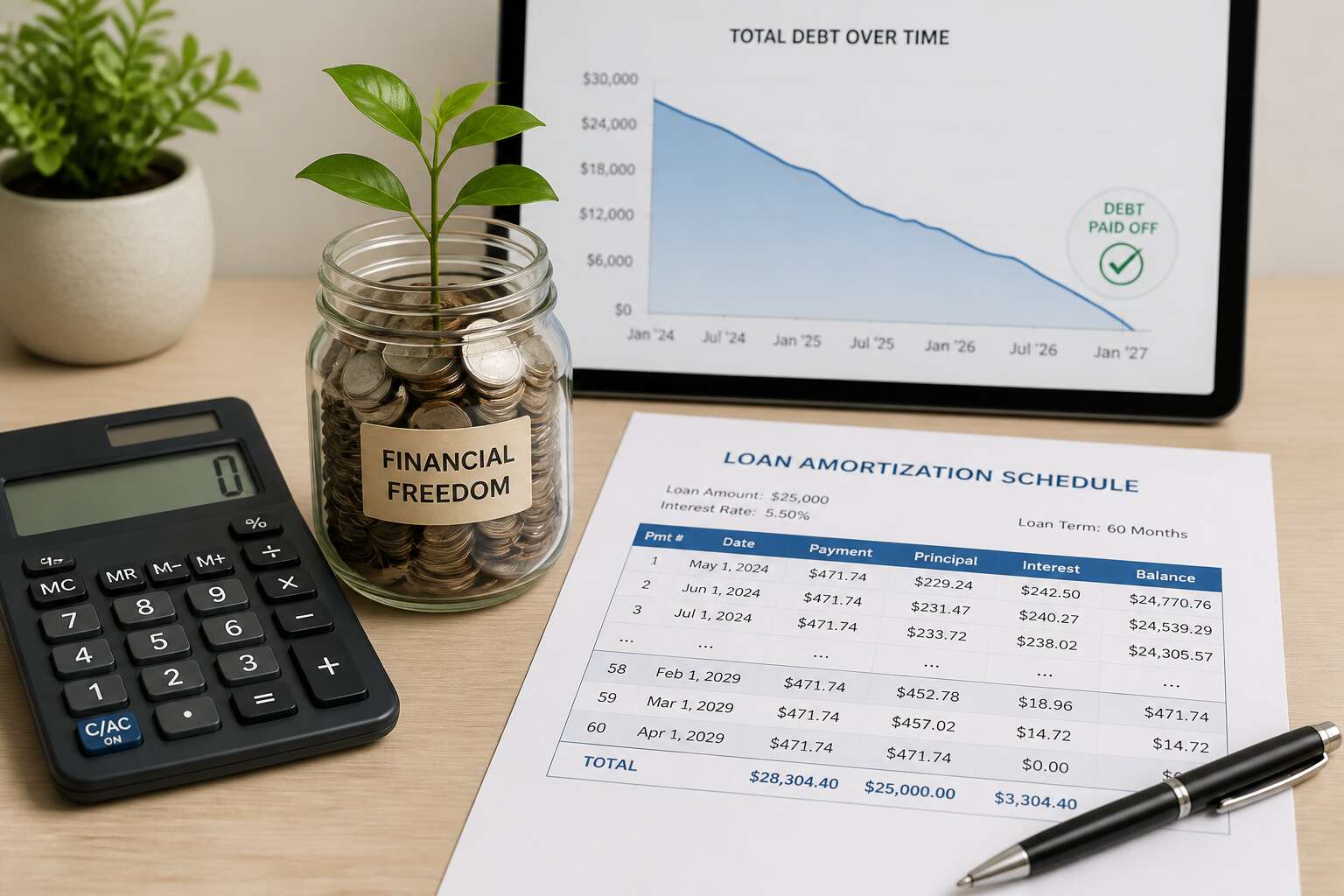
Understanding Debt Consolidation
What Is Debt Consolidation?
Almost 40% of South African credit-active consumers are struggling to meet their monthly debt repayments. That crushing feeling of juggling multiple due dates is a familiar one. Debt consolidation offers a way to untangle this web. It is a strategy to combine several high-interest debts into a single, more manageable loan. You replace multiple creditors with one.
The primary goal is to simplify your financial life on your own terms. Instead of tracking five different statements, you track one. This also allows Standard Bank to apply a single interest rate to your entire outstanding balance. Here is what typically gets swept into the consolidation pot:
1. Store cards and retail accounts.
2. Unsecured personal loans.
3. Outstanding credit card balances.
4. Overdraft facilities.
Securing one of the debt consolidation loans standard bank offers can reduce the total monthly outflow. You are effectively swapping a handful of chaotic payments for one predictable debit order. It gives you a clear timeline for when this financial weight will finally be lifted.
How Does the Process Work?
Consolidating your debt with Standard Bank is a deliberate process. It requires documentation and patience. The application for debt consolidation loans standard bank begins with a candid review of your financial history. Standard Bank examines your credit score, each outstanding balance, and your monthly cash flow. They then compute a single amount sufficient to pay off every creditor. Upon approval, the bank disburses funds directly to those accounts, settling them completely. The sequence is orderly:
- Provide statements for all current debts.
- Undergo an affordability assessment.
- Receive a unified loan offer.
- Accept and watch your old balances clear.
Your monthly obligations narrow to one debit order and one fixed term. No more juggling due dates. Just a solitary payment that steadily reduces your balance to zero.
Key Benefits of Consolidating Multiple Debts
No one plans to manage five due dates! Yet many South Africans do. Multiple debts create a calendar where every week carries a different creditor. Consolidating those debts into a debt consolidation loans standard bank loan reduces the clutter to a single payment. That simplicity is the first benefit. The second is financial. Interest rates on store cards and credit cards often exceed 20%. A debt consolidation loans standard bank loan typically carries a lower rate, which means more of your money goes to the principal. You also eliminate multiple administration fees. Consider the yearly savings:
Common Misconceptions About Debt Consolidation
The South African Reserve Bank reports that household debt to disposable income remains above 60%. That statistic reveals a troubling reality. Many people see consolidation as an instant escape hatch. The truth is more nuanced. A debt consolidation loans standard bank offering is a restructuring tool, not a magic wand. It reorganises your financial obligations into one manageable stream. Lenders need to see a consistent income and a reasonable credit history. You aren’t erasing the debt; you are repurposing it into a single, structured repayment plan.
Several myths surround this financial instrument. Some believe their assets are at risk, which holds little weight for unsecured personal loans. Others assume their credit score will plummet permanently. While an initial enquiry may cause a small dip, consistent repayment on a debt consolidation loans standard bank facility can eventually strengthen your profile. Here are some common fallacies that need addressing:
- Consolidation means you are out of the woods immediately; it is simply a reallocation of your debt.
- It is only for those facing bankruptcy; it is a strategic tool for anyone with high interest burdens.
- You will be blacklisted; paid up debts reflect well on your record.
A further misconception is that the process inflicts immediate damage on your credit rating. Accessing a new line of credit does require a hard check. However, settling those existing store cards and personal loans that were maxed out is generally viewed favourably by bureaus. Your utilisation ratio drops, which is a key metric. The danger lies in running the balances back up on old accounts. That behaviour turns a healthy strategy into a cyclical trap. The goal is to transition from a chaotic state of high interest to a linear path where the monthly settlement is predictable. It requires discipline regarding future spending. When used correctly, a debt consolidation loans standard bank loan provides a clear route away from mounting interest.
Standard Bank’s Personal Loan Features
Overview of Standard Bank Personal Loans
Standard Bank’s personal loan turns multiple debts into a single fixed monthly payment. This structure simplifies your budget and removes the guesswork from repayment. Loan amounts range from R5,000 to R350,000, based on your income and credit profile.
Repayment terms span 12 to 72 months, so you can align the schedule with your cash flow. The application process is fully digital, and approval often arrives within minutes. For debt consolidation loans standard bank, this speed reduces the waiting period. I appreciate that kind of efficiency.
- Fixed interest rates protect you from market fluctuations.
- No early settlement penalties, allowing faster payoff.
- Optional credit life insurance covers unexpected events.
Standard Bank also provides a free debt assessment before you commit. This gives you a clear picture of your obligations. I’ve seen how this clarity helps borrowers. Many South Africans choose debt consolidation loans standard bank to streamline their finances, and this product is built for that exact need.
Interest Rates and Fee Structures
Standard Bank’s personal loan interest rates are not a single, advertised figure. They track the repo rate and your credit profile. This means two borrowers can receive different rates for identical loan amounts. The rate you see after a quick online check is the rate you pay for the entire term.
Beyond the interest, the fee structure is straightforward. You pay a once-off initiation fee and a monthly service fee. For anyone comparing debt consolidation loans standard bank, those figures matter more than the headline rate.
- Initiation fee: a fixed percentage of the loan amount, capped by the National Credit Regulator.
- Monthly service fee: a flat rand amount, not linked to your balance.
That transparency allows you to calculate the true cost before you sign. The effective rate, which includes those fees, is also quoted. That is the number to watch when you compare offers.
Flexible Loan Amounts and Repayment Terms
Loan consolidation standard bank personal loan flexibility begins with the negotiation over amount and term. Borrowers may request a sum large enough to settle multiple creditors, ranging from modest amounts to substantial figures exceeding a million rand. The precise ceiling depends on your income bracket and existing obligations. This is the first moment where the debt consolidation loans standard bank structure reveals its adaptability, as the proposed amount is not a fixed menu selection.
The repayment term operates on a parallel axis of choice, extending typically from twelve months to six years. A shorter term increases the monthly installment but reduces the total interest capitalised over the life of the loan. A longer term, conversely, provides breathing room in your monthly budget. The array of options allows you to align the repayment schedule with your own cash flow rhythm.
– Loan amounts are tailored to your verified affordability.
– Terms are selectable, allowing for a customised monthly installment.
– Early settlement is permitted without penalty, providing an exit strategy.
The selection process becomes a quiet negotiation with your own financial future. You are not locking in a rigid contract, but rather choosing a pace for your journey out of debt. The correct term for one person is a trap for another, which is precisely why this standard bank offering holds its value. This personal loan is a tool for restructuring your life, not a chain. The freedom to choose is the first taste of the financial sovereignty you are working to reclaim.
Eligibility and Documentation Requirements
Basic Eligibility Criteria for Applicants
Debt can feel like a relentless weight. Many South Africans find themselves juggling multiple accounts, each with its own due date, interest rate, and administrative headache. Standard Bank debt consolidation offers a path to simplify this financial burden, but understanding the entry requirements is your first step toward breathing easier. The bank looks for applicants who demonstrate financial responsibility, even if their current situation is strained.
Basic Eligibility Criteria
Before you dream of a single monthly payment, you need to assess whether you qualify. Standard Bank typically requires you to be a South African citizen or permanent resident with a valid ID. Your age matters too, as you generally need to be between 18 and 65 years old. Furthermore, your credit profile will be thoroughly assessed. A history of missed payments doesn’t automatically disqualify you, but it does mean you must show a clear intention and capacity to rectify your financial standing.
If your goal is to secure the most favourable terms, your current standing with the bank is crucial. Existing clients with a good transactional banking history often find the process smoother. The bank also calculates your debt-to-income ratio meticulously. Your total monthly obligations, including your proposed consolidation loan, should not exceed a specific percentage of your gross income. For a successful application, you typically need:
A permanent source of income, whether from employment or a business.
Your salary to be paid directly into a Standard Bank account.
No history of recent court judgments against you.
A debt-to-income ratio that falls within the bank’s accepted limits.
Documentation You Will Need
Having your paperwork in order speeds up the entire journey. You cannot rely on verbal promises or vague recollections, as the bank requires verified proof. Expect to provide a detailed list of all your current creditors, as this helps the bank determine the total amount needed for settlement. You will also need to supply:
1. A certified copy of your South African ID or passport.
2. Your latest three months of bank statements from all your banking accounts.
3. A payslip dated within the last three months if you are employed.
4. An ITR12 tax return if you are self-employed.
5. A comprehensive list of your monthly expenses, including rent, groceries, and transport.
Some applicants wonder if they can consolidate without providing proof of residence. The reality is that a utility bill or lease agreement is almost always non-negotiable. This documents not only your stability but also helps the bank verify your address against the credit bureau. When you opt for Standard Bank debt consolidation, the process can be thorough, but it exists to protect both you and the lender from future financial distress.
Preparation is your secret weapon. By understanding these eligibility criteria and assembling your documentation in advance, you transform a daunting application into a simple administrative task. The road to financial clarity starts with a single, well-prepared step. Rather than facing the anxiety of multiple creditors, you can position yourself for the relief that a structured loan offers. Take the time to review your own finances against these points before you engage with the bank, and you will find the conversation is far more productive.
Required Documents for the Application
Your application stands or falls on the paperwork you submit. When you apply for debt consolidation loans standard bank, every document functions as evidence of your financial standing. The bank does not accept verbal assurances. It requires proof, verified and current.
Gather the following before you approach the bank:
- A certified copy of your ID
- Your latest three months of bank statements
- A payslip dated within the last three months
- An itemised list of every creditor you owe
Self-employed applicants must submit their ITR12 tax return instead of a payslip. Proof of residence, such as a utility bill or lease agreement, is also mandatory. Without these documents, the application stalls before it starts.
How Your Credit Score Impacts Approval
Your credit score directly influences approval for debt consolidation loans standard bank. A score above 700 often secures favourable terms, while a number below 600 can lead to higher interest or rejection. I have seen applicants with steady salaries fail because their credit report showed distress.
Standard Bank evaluates this score along with your current debts. Late payments, maxed out accounts, and multiple enquiries all affect the underwriter’s decision. Consider these key factors:
- Consistency in paying previous loans
- The amount of credit you use against your limit
- Any legal judgements or collection orders on your record
Each factor changes your risk level. A strong score lowers that risk and eases approval. Documentation proves your identity and income. Your credit score proves your repayment behaviour, and that difference often determines the final answer.
Income and Employment Verification Steps
Documentation proves your identity, but your income wins approval. The verification process for debt consolidation loans standard bank follows a sequence:
- Submit three consecutive months of payslips corresponding to your bank statements.
- Allow Standard Bank to cross check each deposit for irregularities.
- Grant permission for a call to your employer, who confirms your tenure and employment status.
I have seen delay when applicants use commission income, since that requires a two year history to be considered stable. This sequence separates stable earners from those with fluctuating cash flows, and verification ensures your consolidated monthly payment falls within your true earning capacity.
Step-by-Step Application Guide
Applying Through the Mobile Banking App
Applying for a debt consolidation loan through the Standard Bank app removes the friction of paperwork and branch visits. It brings the entire process into the palm of your hand, offering a level of control that traditional methods simply cannot match. You can manage your financial future from the comfort of your own home, turning a stressful task into a streamlined experience.
Here is the straightforward process to navigate the application:
- Log in to the Standard Bank app and navigate to the ‘Loans’ section on the main menu.
- Select the ‘Consolidation’ option to review your personalised pre-approved offer, if available.
- Follow the prompts to select your preferred repayment term and confirm the total amount required to settle your existing accounts.
- Verify your details and submit the application with your secure PIN or biometric authentication for instant processing.
The digital interface provides immediate feedback, so you know your financial standing instantly. This eliminates the uncertainty of waiting for days. It empowers you to make decisions on the spot, ensuring that your journey towards financial clarity is as seamless as the technology you use every day. The privacy of your own screen offers a comfortable space to handle sensitive financial matters without pressure.
In-Person Branch Application Process
The fluorescent hum of a Standard Bank branch greets you with an older kind of accountability. For those who distrust screens, the in person path for debt consolidation loans standard bank begins at the consultation desk. You present your documents, and a clerk verifies each line against credit bureau records.
The process moves through three thresholds: confirmation of your identity, validation of your settlement amounts, and signing of the revised credit agreement.
- Submit your original identity document and payslip.
- Provide a signed statement of every outstanding account.
- Wait while the branch manager authorises the payout schedule.
You leave with a printed schedule and a quiet sense of order.
What to Expect Regarding Approval and Payout Time
Comparing Options and Managing Repayment
Standard Bank vs. Other Major Lenders
South Africans often overlook how the interest rate calculation differs between lenders, a detail that changes the total cost of your consolidation. A lower headline rate from another bank might still cost you more if their administration fees are steeper or their payment allocation rules are less favourable. Standard Bank often prices its consolidation products with fewer hidden margins, but you need to compare the prime linked rate and the initiation fee side by side to see the real picture.
When you compare, consider these practical points:
– The repayment term flexibility offered by Standard Bank vs. the rigid structures of competitors.
– The willingness of a lender to accommodate early settlement penalties.
– The speed of fund disbursement for your creditors.
– The quality of the mobile app for managing your new single payment.
Each element shapes the viability of your plan. A longer term lowers your monthly premium but raises the interest accrued over time. Standard Bank allows you to tailor this balance, but managing repayment requires discipline to avoid reusing old credit lines. One practical way to track your progress is simply checking your app balance more frequently than you check your socials. This shift in behaviour matters more than the lender’s name on your statement.
Secured vs. Unsecured Loan Considerations
A secured loan pins your repayment to collateral, while an unsecured loan leans solely on your creditworthiness. For South Africans weighing debt consolidation loans standard bank offers, the distinction changes your risk profile immediately.
- Secured options often lower your interest rate but expose your home or car to repossession.
- Unsecured loans cost more overall, yet they keep your assets out of the lender’s hands.
Managing repayment under each structure requires different discipline. I have seen borrowers underestimate how quickly a missed payment escalates. With secured debt, the penalty affects your collateral directly. With unsecured debt, the damage lands on your credit score and future borrowing power. Your choice should reflect how stable your income remains across the full term, not just the first few months.
Balance Transfer Credit Cards as an Alternative
Comparing debt consolidation loans standard bank offers against a balance transfer credit card changes your repayment logic completely. A balance transfer shifts existing revolving debt onto a new card with a lower introductory rate, sometimes down to zero percent. That appears attractive, yet the window closes. Once it does, the rate climbs, and everything left begins compounding again.
Managing repayment under a debt consolidation loans standard bank structure provides a fixed end date. You know precisely when the debt disappears. A balance transfer, however, leaves that timeline uncertain unless you clear the sum before the promotional period expires. I have watched borrowers treat that grace period as permission to spend elsewhere, only to watch the cycle return with harsher terms.
Key Pros and Cons of Each Approach
Choosing between a personal loan and a balance transfer comes down to how you handle uncertainty. A consolidation loan fixes your repayment schedule, so you know the final instalment date from day one. A balance transfer depends on clearing the debt before the promotional rate expires, which leaves room for slippage.
- Fixed monthly instalments simplify budgeting
- No revolving credit line to tempt further spending
- The interest rate stays constant for the full term
Managing repayment under debt consolidation loans standard bank structures removes the guesswork. The trade-off is commitment to a set term, and missing a payment carries consequences. Balance transfers offer flexibility, but only if you treat the zero interest window as a deadline, not a discount. In my experience, borrowers who prefer certainty choose the fixed route.
Practical Strategies for Staying Debt-Free
There is a distinct relief in watching a single payment replace the chaos of many. Yet the true test comes after the ink dries on the agreement, when the old habits that created the debt hover in the background. A debt consolidation loans standard bank structure does not erase discipline; it merely reorganises the battlefield. The real work begins with how you handle the monthly cycle after the creditors are silenced.
The difference between success and relapse often hinges on the decision to cancel the dormant store cards and credit facilities you have just paid off. Keeping those accounts open is an invitation to rebuild the very burden you sought to escape. A closed account is a quiet victory, while an open line of credit is a siren call in a moment of weakness. The strategy must therefore be ruthless.
Consider these practical measures to keep the weight from returning:
– Separate your daily spending money from the account used for your instalment.
– Set up the payment to leave your account the day after payday arrives.
– Audit your subscriptions and eliminate any service you have not used in three months.
The psychological win is just as vital as the financial one. When you watch the balance on your statement decline month after month, treat it as a record of your progress, not a reminder of past missteps. Some borrowers find it helpful to track the figure on paper, crossing out the old amount each month. This tangible act transforms an abstract debt into a visible, shrinking shadow. Staying clear of new borrowing is not about willpower alone; it is about designing a system that makes the old mistakes inconvenient to repeat.



0 Comments