
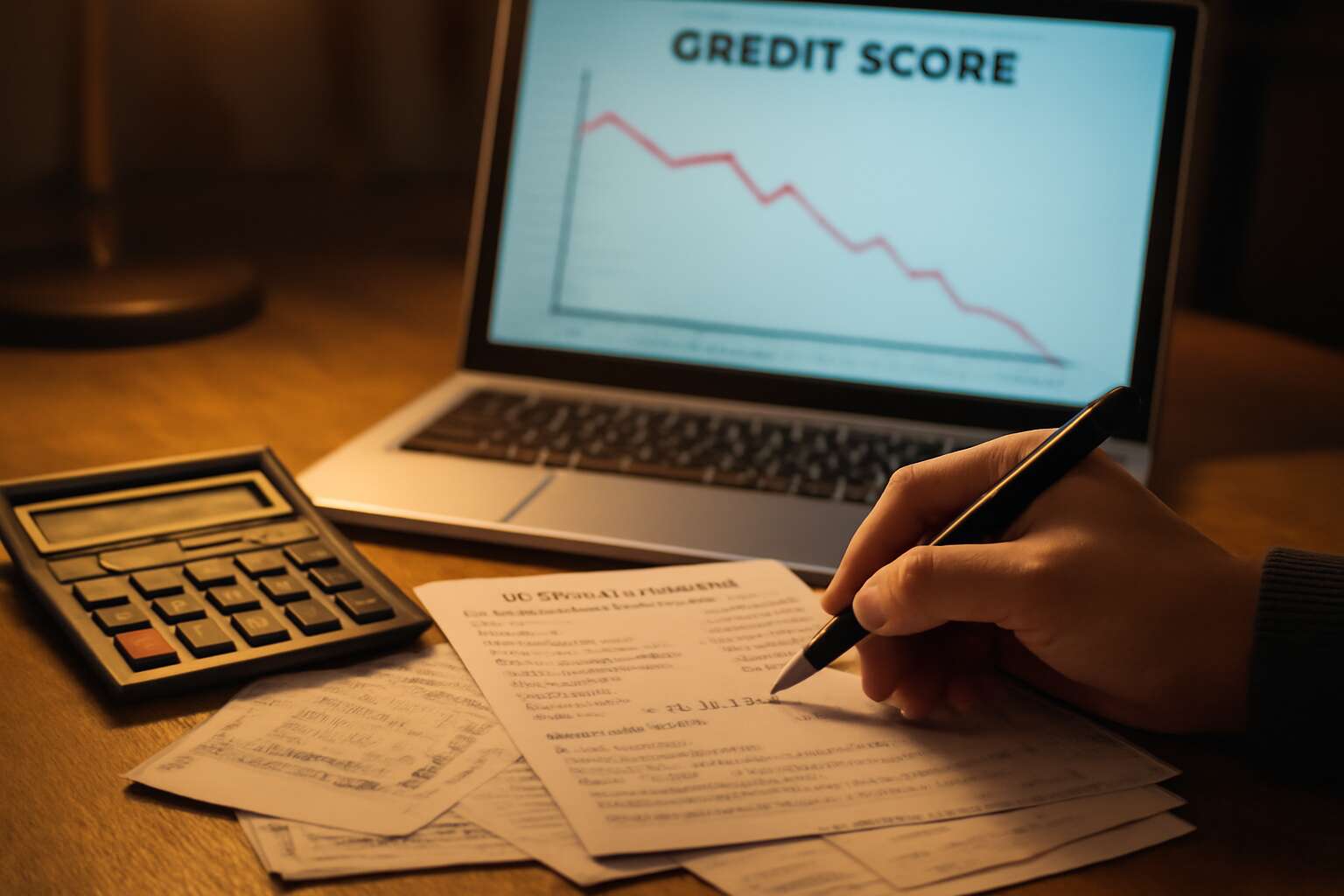
Understanding the Credit Impact of Debt Consolidation
How debt consolidation affects credit scores
“Your credit score is a mirror of recent credit decisions,” a lender once told me. Understanding the credit impact of debt consolidation means watching how one move fits your history. Many people assume debt consolidation bad for credit, but the truth is more nuanced—timing and balance management matter just as much as the loan terms.
Here’s what tends to influence the score after consolidation:
- Hard inquiries from applying for new credit can momentarily weigh on your file
- Shifting balances affects credit utilization
- Closing old accounts changes the average age of accounts
In the SA market, the immediate credit signal can flicker, but long-term effects hinge on consistency and responsible use of the new facility.
Timing of credit score changes after consolidation
In SA, one in four borrowers sees a brief wobble in their credit score in the weeks after debt consolidation. The notion that debt consolidation bad for credit is an oversimplification—the timing of updates matters as the file absorbs new data and your history starts to speak again!
Changes don’t march in lockstep; they arrive in waves.
- Within days: updates from lenders ripple through your file, creating momentary noise.
- Weeks: your repayment pattern starts to guide the score as cycles close and reopen.
- Months: the true shape emerges—age, history, and balance signals settle into a steadier trend.
That is the rhythm of how credit breathes after consolidation.
Hard inquiries versus soft inquiries
In SA, one in four borrowers notices a brief wobble in their score after a debt consolidation inquiry, a reminder that the credit file breathes in waves. The idea that debt consolidation bad for credit often crops up, but the truth hides in how inquiries register. It’s a patient process.
Hard inquiries are the visible marks on your file—when a lender checks your credit, the score can drop a notch. Soft inquiries, like pre-qual checks or offers you can ignore, leave no trace and don’t influence your score.
- Hard inquiries are recorded and can cause a short-term dip
- Soft inquiries stay hidden from the score and don’t affect it
- Multiple pulls in quick succession may be grouped by many scoring models
Over time, the data settles. Age, history, and balance signals slowly shape the trend, muffling the initial noise and revealing the longer arc of your credit story.
Opening new accounts and credit utilization
In SA, one in four borrowers rides the crest and trough of their credit score, a reminder that financial tides are never flat. The myth that debt consolidation bad for credit can whisper from the shadows, but truth often walks in measured steps. The credit file breathes slowly, and emergence of a new plan doesn’t always mean a plunge—it’s a test of balance and patience.
Understanding how opening new accounts and credit utilization interact helps see the longer arc. Opening new accounts can affect the average age of your credit history, until those accounts mature. Credit utilization—the portion of your credit you use—shapes scores even when balances fall. Payment patterns, late or on time, leave a trace that persists beyond a single statement.
- Opening new accounts can affect the average age of your credit history.
- Credit utilization shows how much of your available credit you’re using.
- Payment patterns leave a trace that lasts beyond a single statement.
Long-term effects if you miss payments or default
In SA, about a quarter of borrowers ride the crest and trough of their credit scores, a reminder that the long game never comes with a reset button. Missed payments or outright default can set you back more than you bargain for, creeping into every creditor’s whisper about your reliability.
Here’s how the long-term impact tends to unfold:
- Late payments leave markers that can shadow future lending decisions.
- Defaults often trigger collections and higher interest rates on new credit.
- Prolonged negative history can slow your score’s recovery, even when balances improve.
Yes, debt consolidation bad for credit is not a one-size-fits-all verdict; success hinges on payment discipline and long-term consistency, not the tool itself.
Common Myths About Debt Consolidation and Credit
Myth: It’s always bad for credit
The idea that debt consolidation is a shortcut to credit catastrophe is a stubborn rumor that won’t die. In South Africa’s credit landscape, debt consolidation bad for credit persists as a refrain from those who never weigh the nuance—the real picture depends on how the plan is used.
- Myth: It wrecks your credit score instantly.
- Myth: It erases debts or wipes the slate clean.
- Myth: It ties you to one lender with unfavourable terms.
Credit Myth: It’s always bad for credit is persistent, but the truth hinges on payment discipline and overall debt strategy. When managed prudently, consolidation can smooth cash flow and project reliability rather than undermine it.
Myth: It fixes all debt issues
Common Myths About Debt Consolidation drift through South Africa’s credit landscape like stubborn folklore. The loudest tales claim:
- Myth: It wrecks your credit score instantly.
- Myth: It erases debts or wipes the slate clean.
- Myth: It ties you to one lender with unfavourable terms.
Credit Myth: It fixes all debt issues is persistent, yet the truth hinges on payment discipline and a balanced debt strategy. When used prudently, consolidation can smooth cash flow and project reliability—without erasing responsibility. The phrase ‘debt consolidation bad for credit’ circulates in some corners, but the outcome depends on how the plan is implemented rather than a magical reset.
In the South African context, real progress comes from aligning repayment with income, staying current, and ensuring the path chosen respects local lending practices. Myths dissolve when numbers guide decisions and restraint governs new borrowing, not wishful thinking.
Myth: It hurts credit permanently
Across South Africa’s credit landscape, myths flutter like banners. The fear that debt consolidation bad for credit will ruin your score persists, yet a careful look shows the story isn’t written in stone.
In truth, the outcome hinges on how you deploy the plan. When paired with disciplined payment and a balanced debt strategy, consolidation can smooth cash flow and improve reliability—without erasing responsibility. The notion that it permanently harms credit ignores timing, utilization, and the broader repayment picture.
- Myth vs reality: your score responds to payment history and credit utilization, not the mere act of consolidating.
- Access to better terms can shrink monthly payments and reduce the risk of missed payments.
In our market, real progress comes from staying current and navigating local lending rules. When numbers guide decisions and restraint governs new borrowing, the story of debt consolidation becomes a selective instrument, not a curse.
Myth: You need perfect credit to qualify
Across South Africa, a surprising 60% of borrowers fear debt consolidation bad for credit, a banner of worry that flaps louder than wisdom. Yet the story isn’t settled by fear but by how plans are managed.
Myth: You need perfect credit to qualify. In reality, lenders weigh income, total debt, and repayment history; many options exist for good, fair, or improving scores.
- Not all products demand pristine scores.
- Co-signers or alternatives can unlock options.
- Underwriting considers affordability, not score alone.
Viewed through a South African lens, debt consolidation can be a neutral tool when used with restraint; it avoids becoming a trap and aligns with a broader debt strategy.
Myth: It damages credit but saves money
Across SA, 60% of borrowers fear debt consolidation bad for credit, a banner of worry that flaps louder than wisdom. Yet the story isn’t settled by fear but by how plans are managed.
Common myths about debt consolidation swirl across the market. Credit Myth: It damages credit but saves money. In truth, outcomes depend on affordability, repayment consistency, and how a consolidator’s terms fit the budget.
- It isn’t automatically bad for credit; consequences hinge on use and discipline.
- One streamlined plan can simplify payments and potentially reduce total interest.
- It’s not a cure-all and won’t erase existing debt or risky habits.
Viewed through a South African lens, debt consolidation can be a neutral tool when used with restraint; it’s not inherently debt consolidation bad for credit, but depends on context.
Best Practices to Minimize Credit Impact
Shop for rates to minimize hard inquiries
“The borrower is the slave to the lender”—a timeless line that still stirs the room in every South African finance gathering. When debt consolidation is on the table, the phrase debt consolidation bad for credit can shadow the discussion, even as options surface. The wiser path emphasizes rate shopping within a limited window, allowing the market to reveal the least harmful terms without piling on score-denting inquiries.
Principles of care guide the process: seek lenders who offer soft prequalification to compare options, and group rate checks within a tight window to reduce impact. Preserve old accounts to maintain healthy utilization, and avoid a cascade of new accounts that could murmur doubts to the credit ledger.
Keep existing credit lines open when possible
Best practices to minimize credit impact unfold like a careful voyage through a calm sea. For South African borrowers, the line that debt consolidation bad for credit can hover over options, yet disciplined shopping and measured actions keep score damage modest. The compass points to keeping old credit lines open where possible and timing any rate checks in a focused window to limit unnecessary inquiries.
To reinforce the approach, consider these steps for a smooth path:
- Group rate checks within a narrow window
- Hold existing accounts to support healthy utilization
- Opt for soft prequalification when comparing offers
Small, steady moves preserve credit health while you explore consolidation terms.
Choose a consolidation product wisely
Best practices to minimize credit impact start with a discerning choice of consolidation product in South Africa. “Patience beats panic in credit matters,” as one veteran lender likes to remind us. A well‑chosen loan or balance-transfer line can be a smoothing tide, not a storm. Many readers worry that debt consolidation bad for credit, but outcomes hinge on how you shop and what you do with the account once it’s opened. Focus on terms that align with your real budget and long-term aims.
- Soft prequalification is commonly used to compare offers without dinging your score.
- Rate checks are often grouped in a narrow window to minimize inquiries.
- Transparent fees and clear repayment terms help avoid surprises later.
Small, deliberate moves preserve credit health as you weigh options.
Create a repayment plan with timely payments
“Patience beats panic in credit matters,” a veteran lender likes to remind us. In South Africa, worry about debt consolidation bad for credit fades when a clear repayment plan is in place and payments arrive on time, week after week!
A well‑crafted repayment plan creates a cadence that can soften the impact of consolidation on your score. It anchors decisions to your real budget, reduces the chance of late payments, and preserves access to credit lines when you need them most.
Small, deliberate financial choices keep credit health intact as we weigh options, reminding us that intention and consistency often outpace impulsive fixes.
Monitor your credit report during consolidation
In the stillness after a storm of bills, a truth remains: a plan beats panic. A veteran lender murmurs, ‘Patience is a shield,’ and debt consolidation bad for credit softens when a clear path appears.
Monitoring is steering, not snooping. Keep an eye on your credit report so errors don’t masquerade as missteps. Track every on-time payment, because consistency matters more than bursts of speed in SA’s credit landscape. When conversations circle the topic, remember that timing and reliability can temper the worry.
Best practices to minimize the credit impact include:
- Regular reviews of the credit report reveal inaccuracies that might distort the score.
- Maintaining existing credit lines helps preserve aging history and utilization.
- Automation reduces late-payment risk by aligning payments with the calendar.
Let your budget become a compass, and your repayments the steady drumbeat that keeps your financial garden alive.
Alternatives and Risks of Debt Consolidation
When consolidation can worsen credit
Alternatives drift into view when the promise of a single loan glitters a little too brightly. In South Africa, the chorus of options—credit counseling, creditor negotiations, or preserving existing accounts with steady payments—appears alongside the risk that any consolidation can backfire. The notion of debt consolidation bad for credit surfaces not as a universal verdict, but as a conditional warning, a reminder that context governs fate.
- Formal debt management arrangements and creditor negotiations
- Preserving existing accounts while disciplined payments are kept
These threads remind us that alternative paths carry their own myths and temperamental costs, weaving a slower, more nuanced rhythm into credit’s dance.
Borrowing more versus using savings
In South Africa’s townships and farmlands alike, the choice between borrowing more to tidy debt and drawing on savings is a daily reckoning. A single, neat payment can feel like relief, but the price tag is often bigger than the comfort it brings. The idea that debt consolidation bad for credit surfaces when the new loan’s bells ring louder than the longer game of steady, prudent repayment!
Consider these facets as you weigh the options:
- Borrowing more reduces monthly strain but can widen the total debt load.
- Using savings preserves credit health but reduces a family’s safety net.
- Both routes hinge on discipline and clear repayment terms.
These choices carry their own myths and temperamental costs—lulls into false security or traps in a longer cycle of payments.
DIY budgeting and debt payoff strategies
Alternatives to yet another loan hum with the quiet discipline of thrift. DIY budgeting treats a household budget as a living contract—no glittering ads, only a ledger that keeps score. The risk is real: a misread cash flow or an unforeseen bill can widen the gap between aspiration and reality. debt consolidation bad for credit surfaces when the glossy promise masks longer-term odds. In South Africa’s townships and farming belts, tidying debt without friction can feel merciful—until the old balances refuse to stay quiet.
Debt payoff strategies offer a different rhythm: consistency over spectacle. These DIY approaches reward discipline and regular review, reducing the allure of new debt while preserving dignity and solvency.
Impact of missed payments on credit
Debt travels fast in South Africa, weaving through townships and farming belts— a glossy consolidation offer can look like a lifeboat, yet it often drifts you toward a longer horizon of payments. Alternatives exist that keep hearts steady: DIY budgeting, cash-flow tracking, and negotiated repayment terms. Some say debt consolidation bad for credit, and with good reason. The DIY path treats money as a living contract—the ledger whispers, clear, disciplined, and merciless to excuses.
- Missed payments can trigger penalties and higher interest.
- Opening or closing accounts can shift credit utilization and scores.
The question of debt consolidation bad for credit hinges on timing and discipline.



0 Comments